Source: China Iron and Steel Association (CISA) via SteelOrbis and Mysteel Global, October 2026
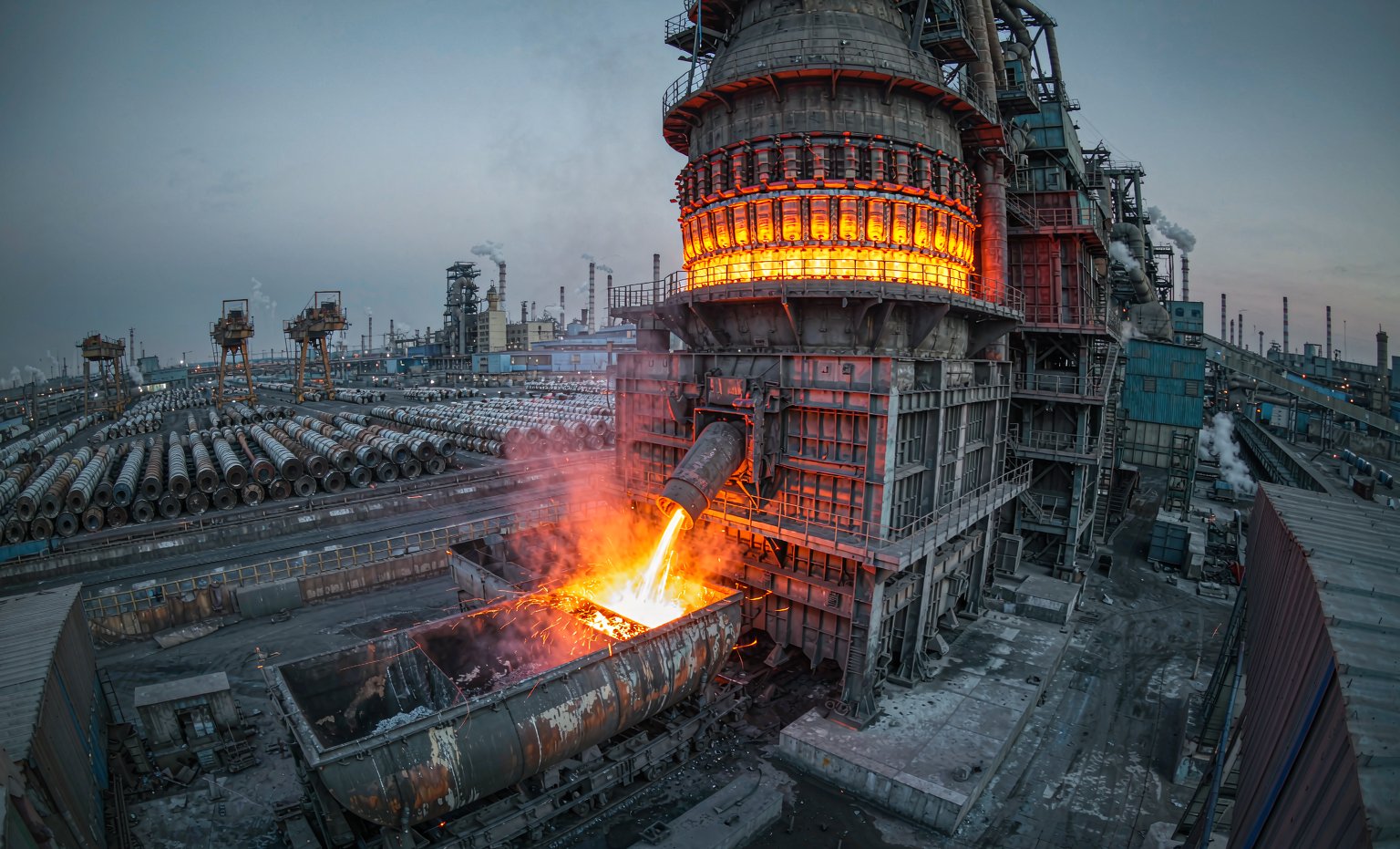
Statistics released by the China Iron and Steel Association show that large and medium-sized steel enterprises in China, all of them CISA members, produced an average of 1.939 million tonnes of crude steel per day during the first ten days of October 2026. The figure represents an increase of 3.1 percent over the average recorded in the last third of September, when daily output had slipped 2.1 percent from mid-September to 1.881 million tonnes. The rebound confirms that, despite persistent losses across the sector, Chinese mills moved quickly to restart or raise production once the National Day holiday period ended.
The composition of the October data reveals an uneven picture across the production chain. Average daily pig iron output rose 1.4 percent to 1.778 million tonnes, indicating that blast furnace operations remained the main driver of the output increase, while average daily production of finished steel products actually fell 11.5 percent to 1.82 million tonnes. At the same time, finished steel inventories held by the key mills climbed sharply. As of October 10, stocks stood at 16.97 million tonnes, an increase of 1.32 million tonnes, or 8.4 percent, compared with September 30. Inventories were also 2.7 percent higher than in early September, 6.9 percent above the level of a year earlier, and 20 percent above the level at the start of 2026.
Market observers attribute the inventory build-up primarily to soft downstream demand in the days following the holiday rather than to a renewed supply surge alone. The steel purchasing managers index compiled for China stood at 47.8 in September, still firmly in contraction territory, and Mysteel surveys indicate that only 8.23 percent of domestic mills were profitable in the middle of October. Weekly Mysteel data covering the five major steel product categories show supply broadly flat at 7.95 million tonnes while consumption rebounded 21.7 percent to 8.63 million tonnes and total social inventories fell 4.4 percent to 14.80 million tonnes, suggesting that distribution channels are still working through post-holiday restocking even as stocks accumulate inside the mills. Spot prices remain under pressure, with rebar in Shanghai quoted near 3,327 yuan per tonne and hot-rolled coil near 3,256 yuan per tonne.
The mismatch between rising hot metal output and sluggish end-user demand points to renewed destocking pressure in the Chinese market over the coming weeks, and analysts expect mills to come under growing pressure to trim production again unless demand improves. For the international market, the direction Chinese mills take matters well beyond China: weaker domestic absorption tends to keep export offers competitive and adds to the trade friction already visible in the United States, Europe, Southeast Asia and the Middle East. How quickly Chinese producers restore the balance between output and real demand is therefore likely to remain a central variable for global steel prices through the final quarter of 2026.