Source: European Commission, Reuters
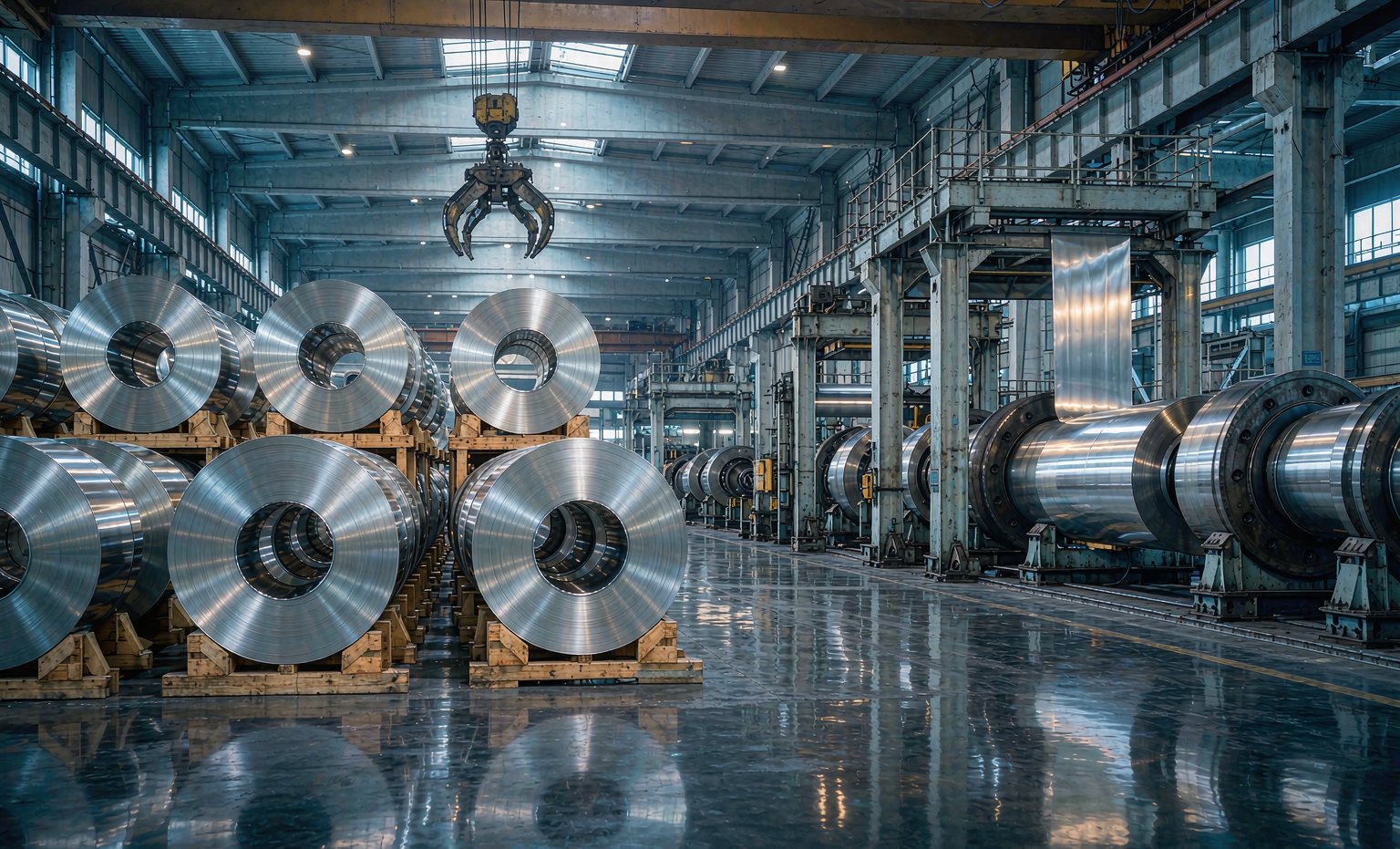
The European Commission imposed definitive anti-dumping duties on imports of certain cold-rolled flat steel products from India, Japan, Taiwan, China, Türkiye and Vietnam on 16 November, effective the following day. Rates were set at 9.5 percent for Indian producers including JSW Steel and Tata Steel, 27.9 percent for Japanese mills such as Nippon Steel and JFE Steel, 20.7 percent for cooperating Taiwanese producers and 27 percent for non-cooperating ones, 3.0 to 7.8 percent for Turkish steelmakers, and 16 percent for Vietnamese suppliers. The duties apply to the net, free-at-Union-frontier price before customs clearance, and the Commission found no grounds for retroactive collection despite registration of imports during the probe.
Cold-rolled flat steel feeds most branches of manufacturing, from car bodies and aircraft components to household appliances, machinery, construction and packaging. The EU market is valued at roughly 23.2 billion euros, with production spread across 12 member states and more than 8,600 jobs. Imports from the five origins total about 1.78 billion euros, led by Taiwan, China at 345 million euros, followed by India at 282 million, Türkiye at 240 million, Japan at 180 million and Vietnam at 125 million.
The proceeding is the first in which the Commission established what it calls particular market situations in some exporting economies. In India, it found government measures affecting domestic iron ore prices had distorted local steel prices. In Taiwan, China, it concluded that Chinese overcapacity had driven a surge of imports from the mainland, depressing domestic prices and eroding local producers' profitability. Where such a situation is recognised, EU rules allow the Commission to construct a normal value from external costs rather than domestic sales prices, a method previously reserved largely for China. Brussels called the case systemically important for its trade defence toolkit, signalling the approach could extend to other suppliers.
Eurofer, the European steel association, lodged the complaint in 2025 and said unfairly priced imports had put European production and jobs at risk, calling the duties necessary to restore fair competition. The measure adds to a tighter import regime introduced in July 2026, when the EU replaced its safeguard with a tariff-rate quota system that cuts duty-free volumes and applies a 50 percent duty above quota, alongside the carbon border adjustment mechanism now in force. Traders expect volumes shut out of Europe to be redirected to Southeast Asia, the Middle East, Latin America and Africa, while European carmakers and appliance manufacturers absorb higher input costs.