Source: UK Government and Trade Remedies Authority, reported by SteelOrbis and Mysteel
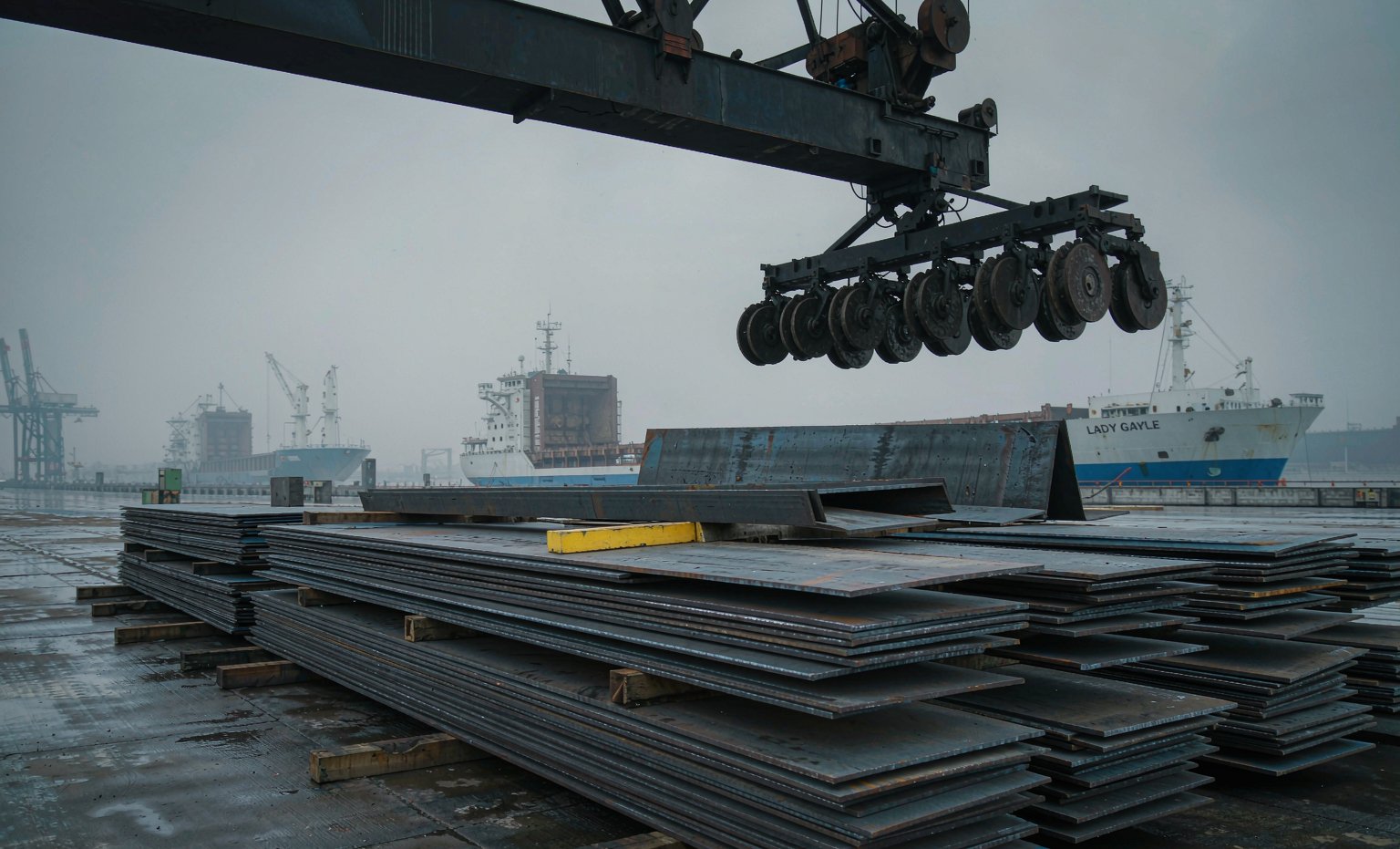
The United Kingdom has imposed definitive anti-dumping duties on imports of certain hot-rolled steel plate originating in South Korea, effective from 19 November 2026 and running for five years until 19 November 2031. Under the notice, Hyundai Steel faces a rate of 7.04 percent, POSCO 12.19 percent and all other South Korean exporters 23.07 percent, while plate exceeding 2,100 mm in width carries a zero rate. With the definitive measure now in force, the government has terminated the registration requirement that had applied to imports of the products concerned during the investigation.
The measure covers certain hot-rolled flat products of iron, non-alloy steel and other alloy steel, generally 600 to 1,200 mm in width and 4.75 mm in thickness, subject to the product descriptions and exclusions set out in the official notice. The commodity codes affected are 7208 5120, 7208 5191, 7208 5198, 7208 5210, 7208 5291, 7208 5299, 7208 9020, 7208 9080, 7210 9030, 7225 4040 and 7225 4060, covering uncoated plate together with certain coated lines within the same product family.
The Trade Remedies Authority had recommended duties ranging from 5.98 percent to 25.71 percent across the entire product scope under investigation. The Secretary of State declined to apply duties to that full scope, taking into account the authority's own assessment that measures covering all products would not be in the United Kingdom's economic interest, together with wider public interest considerations. The result is a narrower product scope, company-specific rates for the two largest Korean suppliers and a zero rate for extra-wide plate.
The decision lands on a market already reshaped by the UK's new steel trade measure, in force since 1 July 2026, which cut the duty-free import quota by 51 percent to roughly 3.2 million tonnes and raised the tariff on out-of-quota volumes to 50 percent after the 25 percent safeguard surcharge lapsed on 30 June. A UK carbon border adjustment mechanism is scheduled to start in 2027, and domestic supply is being restructured as British Steel, nationalised in July, shifts from blast furnace steelmaking at Scunthorpe towards electric arc furnaces. Korean plate suppliers therefore face higher landed costs in a market where import access is already rationed by quota. For traders elsewhere in Asia, the immediate question is whether displaced Korean tonnage will be redirected towards the European Union or Southeast Asia, where competition from Chinese and Indian material is already intense.